Imagine a patient calls your clinic at 9 AM. They wait on hold for 10 minutes, get frustrated, and hang up. They call another clinic. You lost a patient — and you didn't even know they called.
This happens every single day across hospitals and clinics in India. And the numbers back it up:
-
20–30% of healthcare appointments are missed every day due to poor communication and lack of timely reminders.
-
62% of patients who can't reach a clinic on the first call will simply move on to a competitor.
-
India's digital health market is already worth USD 14.5 billion (2024) and growing at 25% annually — patients expect modern, digital-first communication from their healthcare providers.
-
The global patient engagement solutions market hit USD 27.63 billion in 2024 — and cloud-based delivery accounts for over 72% of it.
The gap between what patients expect and what most clinics offer is widening fast. And the fix is simpler than most healthcare providers think.
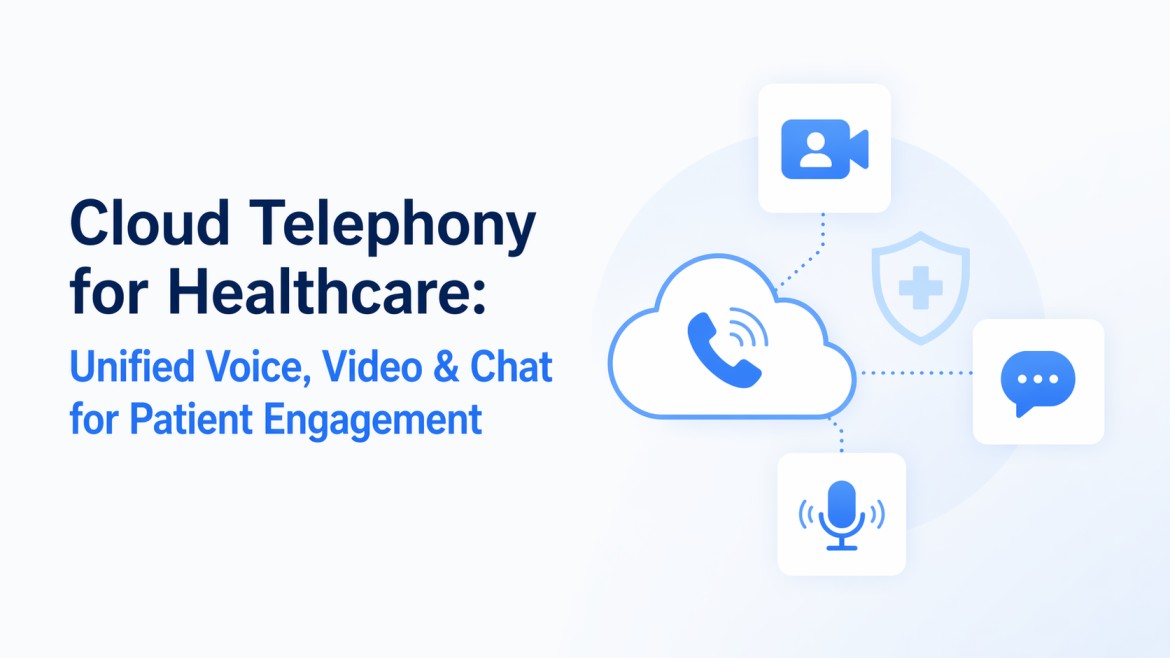
It's called cloud telephony — and it brings your voice calls, video consults, and chat messages together in one place, so no patient ever slips through the cracks.
What Exactly Is Cloud Telephony?
Think of it as your phone system — but running on the internet instead of old copper wires and bulky hardware.
With cloud telephony, your hospital or clinic can handle calls, send WhatsApp reminders, run video consultations, and manage patient messages all from a single dashboard. No expensive equipment. No IT team required. Just plug in and go.
Why Does Healthcare Need This Right Now?
Let's be honest — most clinics still use a basic landline, a personal WhatsApp number for patient messages, and a paper register for appointments. It works, until it doesn't.
Here's what that setup actually costs you:
-
20–30% of appointments are no-shows. Patients forget, can't reschedule, or simply couldn't reach you to confirm.
-
Missed calls = missed patients. Research shows 62% of patients who can't reach a clinic on the first try will call a competitor.
-
Front-desk staff spend hours on manual reminder calls that could be fully automated.
Meanwhile, India's healthcare landscape is shifting fast. The country's digital health market is growing at over 25% annually and the telehealth segment alone is expected to cross USD 27 billion by 2030. Patients — especially younger ones — now expect digital-first communication. If your clinic isn't keeping up, someone else is.
The Three Things Cloud Telephony Does for Your Patients
1. Voice — Never Miss a Patient Call Again
A smart IVR (the "press 1 for OPD, press 2 for billing" system) answers every call instantly and routes it to the right department. No hold music. No wrong transfers.
When someone calls and can't get through, the system automatically sends them a WhatsApp message: "Hi, we saw your call. Click here to book your appointment." That's a patient saved without any staff effort.
Automated reminders sent 24 hours before an appointment have been shown to cut no-shows by up to 40%. For a clinic running 100 appointments a day, that's a significant chunk of recovered revenue.
2. Video — Bring Care to the Patient, Not the Other Way Around
Not every consultation needs a patient to travel. Follow-up visits, prescription renewals, mental health sessions, and chronic disease check-ins can all happen over a secure video call.
India's eSanjeevani government telehealth platform has already crossed 340 million consultations, proving that Indian patients are ready and willing to consult virtually. Your clinic should be too.
Patients simply click a link — no app download, no login hassle. The doctor sees them on video, the call is recorded for records, and the whole thing takes a fraction of the time of an in-person visit.
3. Chat — Stay Connected Between Visits
WhatsApp is how India communicates. With a proper cloud telephony platform, your clinic can send appointment confirmations, lab result alerts, post-discharge instructions, and medication reminders — all through WhatsApp, automatically.
After a patient is discharged, they receive their follow-up instructions before they even reach home. If they have a question, a chatbot handles it instantly. Your staff only step in for the complex stuff.
Who Benefits Most?
Patients get reminders, faster responses, and the option to consult from home. No more waiting rooms for simple follow-ups.
Doctors get a virtual number that protects their personal phone, a full log of patient interactions, and video tools that fit into their existing schedule.
Hospital administrators get real-time dashboards showing call volumes, missed calls, peak hours, and response times — so they can make smarter staffing decisions.
Front-desk staff spend less time on repetitive calls and more time on patients who actually need personal attention.
Is It Safe for Patient Data?
This is the most common concern — and a fair one.
A reliable cloud telephony provider will offer end-to-end encryption on all calls and messages, call recordings with access controls, and data stored within India in line with the DPDP Act 2023. Look for ISO 27001 certification and a valid DOT licence before signing up with any provider.
CloudConnect is India's first DOT-licensed B2B Virtual Network Operator, ISO 9001 and ISO 27001 certified — built specifically for the compliance requirements of Indian businesses, including healthcare.
FAQs
Can small clinics afford cloud telephony?
Yes. You pay only for what you use. There's no hardware to buy and no IT team needed. A single-doctor clinic can get started for a fraction of what a traditional phone system costs.
How long does setup take?
Most clinics go live within 2–5 business days. Larger hospital chains with custom setups may take 2–4 weeks.
What if the internet goes down?
Calls automatically reroute to mobile numbers or backup lines. A 4G backup connection is a simple and inexpensive safeguard for any clinic.
Does it work with our existing hospital software?
Most modern cloud telephony platforms connect with HIS, EHR, and CRM systems through standard APIs. CloudConnect supports ABDM-compatible integration.
The Bottom Line
Cloud telephony isn't a luxury for large hospital chains. It's a practical upgrade that any clinic — large or small — can make today. It reduces no-shows, captures missed patients, saves staff time, and brings your communication into the same era as your patients.
If your clinic is still relying on a single landline and a personal WhatsApp number, there's a better way.
Talk to CloudConnect and see how easy the switch can be.