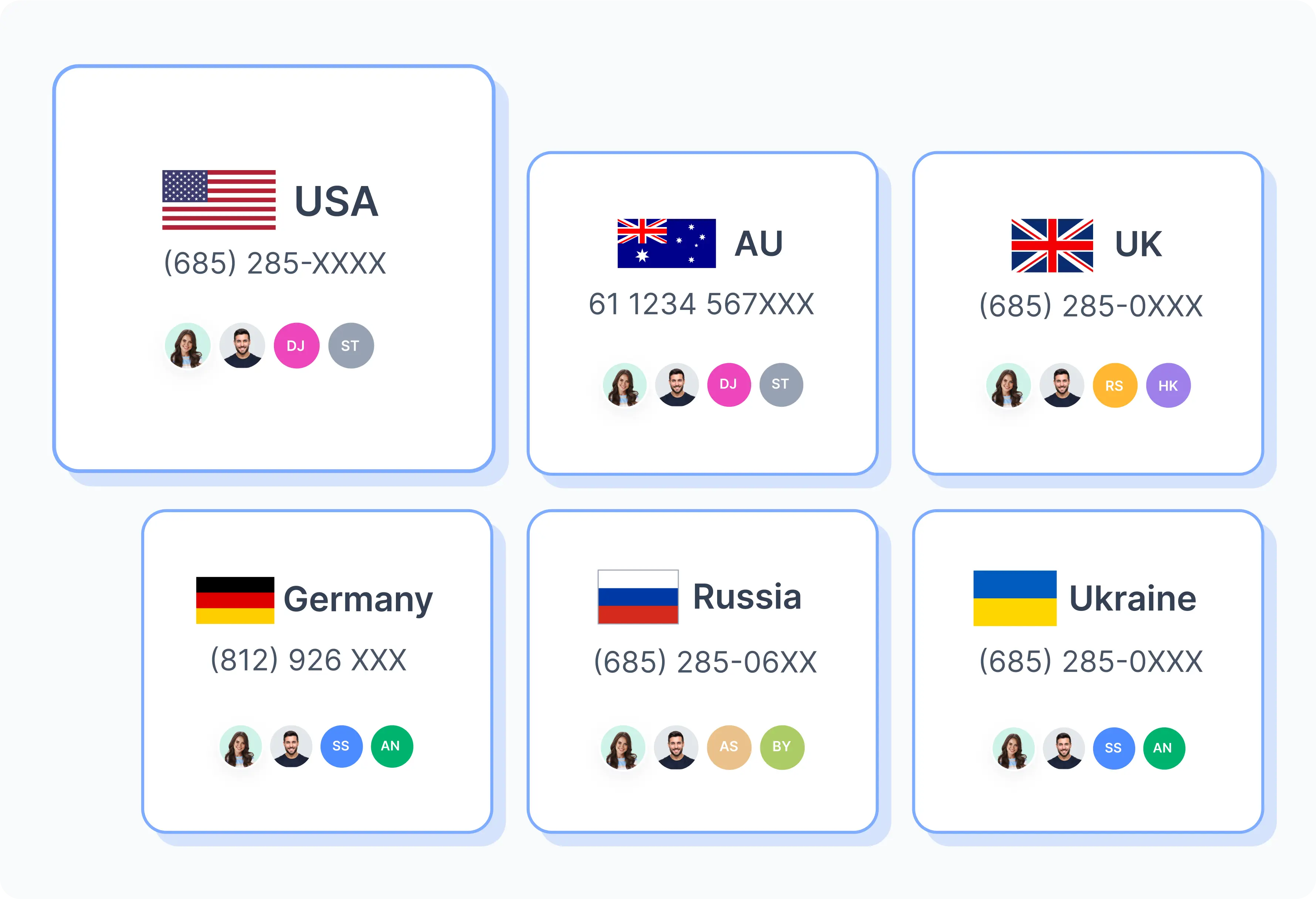
As businesses expand across borders, DID phone numbers have become a foundational layer of modern business communication. From customer support and sales to OTPs, WhatsApp, and compliance-driven messaging, DID numbers allow companies to build local presence at global scale—without physical offices.
Introduction: Why DID Numbers Matter (With Data)
-
The global cloud telephony & CPaaS market is expected to exceed USD 50 billion by 2030, growing at a 20%+ CAGR.
-
Over 72% of customers still prefer calling or messaging businesses over email.
-
Businesses using local DID numbers see 25–40% higher call answer rates compared to Global numbers.
-
Enterprises operating across multiple geographies save 30–60% in communication costs by replacing traditional telecom with DID numbers.
-
Remote sales and support teams using cloud numbers report 20–35% improvement in productivity due to CRM and IVR integrations.
DID numbers are no longer a “tool”—they are core business infrastructure.
What Is a Global DID Number?
A global DID number is a cloud-based phone number not tied to a physical SIM or location. Calls and messages are routed via the internet to:
-
Call centers and agent dashboards
-
Mobile phones and softphones
-
CRMs, helpdesks, and ticketing tools
Common Use Cases
-
Inbound sales & lead management
-
Customer support & IVR
-
WhatsApp Business & SMS alerts
-
OTPs, verification, and notifications
-
Multi-country customer engagement
How to Evaluate a DID Number Provider
Before choosing a provider, businesses should assess:
-
Geographic Coverage – Local, mobile, and toll-free numbers
-
Regulatory Compliance – KYC, DLT, data residency, telecom laws
-
Call Quality & Uptime – SLA, redundancy, latency
-
Pricing Transparency – Number cost, call rates, hidden fees
-
Integrations & APIs – CRM, WhatsApp, analytics
-
Scalability – From 5 agents to 5,000+
Top Global DID Number Providers for Businesses
1. CloudConnect
Best for: India-first and global businesses needing compliance + scale
Coverage: India + Global numbers
Key Strengths:
-
Fully India-compliant DID numbers (TRAI, DLT, KYC-ready)
-
Local, mobile, and toll-free numbers
-
Built for sales, support, and admission teams
-
WhatsApp, IVR, call recording, analytics
-
Competitive pricing with enterprise-grade reliability
Why CloudConnect stands out:
Unlike many global CPaaS platforms, CloudConnect is designed with Indian regulatory complexity in mind, while still supporting global expansion. It’s especially effective for EdTech, BFSI, Healthcare, E-commerce, and Enterprises that need reliability without hyperscaler pricing.
2. Twilio
Best for: API-first, developer-led global platforms
Coverage: 100+ countries
Strengths:
-
Industry-leading APIs for voice, SMS, WhatsApp
-
Extremely scalable
-
Large developer ecosystem
Limitations:
-
Can become expensive at scale
-
Compliance and onboarding often self-managed
3. Vonage
Best for: Large enterprises and global contact centers
Coverage: 90+ countries
Strengths:
-
Enterprise-grade voice quality
-
Unified communications + APIs
-
Strong compliance support
Limitations:
-
Higher minimum contracts
-
Slower onboarding in some regions
4. RingCentral
Best for: Unified communication (voice, meetings, messaging)
Coverage: 45+ countries
Strengths:
-
All-in-one UCaaS platform
-
Strong reporting & uptime SLAs
Limitations:
-
Limited flexibility for complex telecom workflows
-
Higher per-user pricing
5. Aircall
Best for: Sales and customer support teams
Coverage: 100+ countries
Strengths:
-
Fast setup
-
Excellent CRM integrations
-
Call coaching and monitoring tools
Limitations:
-
Not ideal for OTP or heavy messaging use cases
6. Plivo
Best for: Cost-efficient, API-driven businesses
Coverage: 190+ countries
Strengths:
-
Competitive global pricing
-
Reliable SMS and voice APIs
Limitations:
-
Smaller ecosystem than Twilio
-
Limited managed services
Quick Comparison Snapshot
| Provider | Global Reach | Compliance Support | Pricing | Best Fit |
|---|---|---|---|---|
| CloudConnect | ⭐⭐⭐ | Very High (India) | $ | India + global expansion |
| Twilio | ⭐⭐⭐⭐⭐ | Medium | $$$ | Developers & SaaS |
| Vonage | ⭐⭐⭐⭐ | High | $$$ | Enterprises |
| RingCentral | ⭐⭐⭐ | High | $$$ | UCaaS |
| Aircall | ⭐⭐⭐⭐ | Medium | $$ | Sales teams |
| Plivo | ⭐⭐⭐⭐⭐ | Medium | $$ | API-first platforms |
How to Choose the Right Provider
Ask these internal questions:
-
Is India compliance critical to our business?
-
Do we need WhatsApp + Voice + SMS in one platform?
-
Are we API-led or agent-led?
-
Which 2–3 countries drive most of our calls?
-
Are we optimizing more for cost, scale, or control?
For many India-centric or India-expanding businesses, CloudConnect becomes the most practical starting point.
FAQs
Q1. Are DID numbers legal for business use?
Yes, provided the numbers follow local telecom regulations and KYC norms.
Q2. Can DID numbers be used for WhatsApp Business?
Yes, subject to country-specific policies and verification requirements.
Q3. Are DID numbers suitable for OTP and verification?
Yes, but countries like India require DLT registration and approved templates.
Q4. Can I record calls using DID numbers?
Yes. Most platforms offer call recording with consent and compliance controls.
Q5. Which provider is best for India-focused businesses?
Platforms with strong local compliance and support—such as CloudConnect—are typically more reliable and cost-effective.
References
-
Gartner – Cloud Communications Market Forecast
-
Statista – Global VoIP & CPaaS Market Data
-
McKinsey – Customer Communication Preferences
-
TRAI – Telecom & DID Number Regulations (India)
-
Vendor documentation: Twilio, Vonage, RingCentral, Plivo
Final Thought
There’s no universal “best” DID number provider. The right choice depends on geography, compliance, scale, and cost sensitivity.
For businesses operating in or expanding to India—while still thinking global—CloudConnect offers a strong balance of compliance, performance, and value.