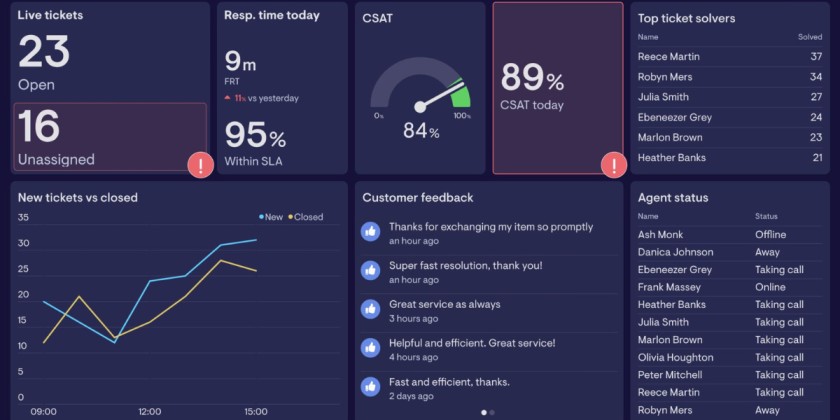
Customer experience (CX) is no longer a “soft metric.” It directly impacts revenue, retention, and brand trust.
Global benchmarks & data points
-
86% of customers are willing to pay more for a better experience (PwC)
-
32% of customers stop doing business after just one poor interaction
-
Contact centers influence 60–80% of overall brand perception
-
Improving CSAT by 5% can increase customer lifetime value by 25–95%
-
Organizations with structured QA programs report:
-
20–40% higher CSAT
-
15–25% lower repeat calls
-
30–50% reduction in escalations
At the same time:
-
Over 70% of customer interactions are now non-voice
-
Average enterprises manage 5–7 customer channels
-
Manual QA typically covers only 2–3% of total interactions
This makes Call Center / Contact Center Quality Assurance a strategic growth function, not a compliance activity.
Modern omnichannel platforms such as CloudConnect RingCX embed AI-driven QA directly into daily operations—making quality measurable, scalable, and actionable.
1. What Is Call Center Quality Assurance (QA)?
Call Center Quality Assurance is the continuous, structured process of evaluating customer interactions to ensure agents meet defined standards for:
-
Service quality
-
Accuracy and compliance
-
Customer experience
-
Resolution effectiveness
Operational Benchmarks
-
Manual QA coverage (traditional): 2–5% of interactions
-
AI-enabled QA coverage: 100% of interactions
-
High-performing QA teams share feedback within 48–72 hours
-
Organizations with weekly QA reviews improve agent scores by 20–30% in 90 days
Key QA Evaluation Areas & Targets
|
Area |
Benchmark |
|
Accuracy of information |
≥98% |
|
Compliance adherence |
≥99% (regulated industries) |
|
Soft skills & empathy |
85%+ QA score |
|
Resolution quality |
FCR 70–75%+ |
2. QA vs QC vs QM (With Benchmarks)
|
Function |
Primary Focus |
Industry Benchmarks |
|
Quality Assurance (QA) |
Interaction quality |
CSAT 85–90% |
|
Quality Control (QC) |
Process & adherence |
Schedule adherence ≥90% |
|
Quality Management (QM) |
QA + QC combined |
Overall KPI uplift 15–25% YoY |
Insight: Organizations integrating QA + QC under QM frameworks experience 18–22% faster issue resolution during peak volumes.
3. Call Center QA vs Contact Center QA (Detailed View)
Market Reality: How Customer Interactions Have Changed
Customer support is no longer voice-dominated. The modern customer journey is fragmented across multiple digital touchpoints:
-
70%+ of customer interactions now happen via chat, email, WhatsApp, SMS, and social media
-
Customers typically switch 2–3 channels during a single support journey
-
Omnichannel customers show 30% higher lifetime value (LTV) and higher brand loyalty
-
Customers expect context continuity—they don’t want to repeat the same issue across channels
This shift means that quality cannot be measured in silos anymore.
Why Cross-Channel QA Matters
-
A customer may start on WhatsApp, escalate to email, and finally call support
-
Poor experience on any one channel impacts the overall perception
-
Agents need to maintain consistent tone, accuracy, and resolution quality across channels
Benchmark Insight
-
QA programs focused only on voice calls miss 40–50% of customer experience issues
-
Organizations applying cross-channel QA report:
-
23% higher retention
-
18% fewer escalations
-
Improved brand trust scores
Key Takeaway
Today, Call Center QA and Contact Center QA are functionally the same.
True quality measurement must cover voice + digital channels together, using a unified framework.
4. Why QA Is Critical to Business Performance
A. Agent Performance Impact
Quality assurance is one of the strongest drivers of agent productivity and morale.
Benchmarks
-
Monthly QA coaching → 15–20% productivity improvement
-
Continuous QA feedback → 30% lower agent attrition
-
AI-assisted QA coaching → 25% faster agent ramp-up
-
Agents receiving structured feedback outperform peers by 22–28%
Why this happens
-
Agents clearly understand expectations
-
Training becomes targeted, not generic
-
Coaching focuses on real interactions, not assumptions
B. Customer Experience Impact
QA directly influences how easy, fast, and pleasant it is for customers to get help.
Benchmarks
-
+1% improvement in First Contact Resolution (FCR) → ~5% operational cost reduction
-
CSAT above 85% → 2× higher repeat purchase probability
-
Faster issue resolution reduces Customer Effort Score (CES) by 20–30%
-
High-effort experiences increase churn risk by up to 94%
Why this matters
Customers remember:
-
How quickly their issue was resolved
-
Whether they felt heard
-
Whether they had to follow up again
QA ensures all three are addressed consistently.
C. Business & Financial Impact
QA is no longer just about service—it protects revenue and compliance.
Benchmarks
-
QA-led process improvements reduce escalations by 35%
-
Repeat contacts drop by 10–25%
-
Automated QA reduces compliance breaches by 40%
-
Mature QA programs improve cost-to-serve by 15–20%
5. Benefits of Call Center Quality Assurance (Measured Outcomes)
|
Business Area |
Typical Improvement with Structured QA |
|
Customer Satisfaction (CSAT) |
+20–30% |
|
First Contact Resolution (FCR) |
+10–15% |
|
Average Handle Time (AHT) |
−8–12% (without CX loss) |
|
Agent Engagement |
+25–30% |
|
Customer Retention |
+5–10% |
|
Escalation Rate |
−30–35% |
Insight: QA delivers both CX uplift and cost efficiency, making it one of the highest-ROI contact center investments.
6. Challenges in Call Center QA (With Real Data)
Operational Challenges
-
Manual QA consumes 30–40% of supervisor time
-
Evaluator bias creates 15–20% scoring variance
-
Sampling reviews miss up to 95% of interactions
-
40% of agents initially resist monitoring due to fear of micromanagement
-
Feedback delays reduce coaching effectiveness by up to 50%
Outsourced / BPO Challenges
-
Misaligned quality definitions cause 20–25% CSAT drop
-
SLA-only monitoring misses ~40% of CX issues
-
Lack of visibility across vendors increases compliance risk
7. Call Center QA Best Practices
1️⃣ Continuous Monitoring
-
Weekly QA reviews outperform monthly reviews by 2×
-
Real-time QA alerts reduce escalations by 25%
-
KPI refresh every 6 months keeps QA aligned with business goals
-
CSAT: ≥85%
-
FCR: 70–75%
-
Transfer rate: <10%
2️⃣ Clear QA Ownership
-
Single QA owner improves scoring consistency by 18%
-
Peer QA programs reduce onboarding time by 25%
-
Agent self-review increases accountability by 20%
3️⃣ Right QA Software (AI-Driven)
Organizations using AI-based QA:
-
Reduce manual effort by 50%
-
Detect sentiment shifts 3× faster
-
Improve compliance detection by 40%
-
Increase QA coverage from 5% → 100%
Platforms like CloudConnect RingCX enable:
-
Automated scoring
-
Call/chat transcripts & summaries
-
Omnichannel QA dashboards
-
Real-time alerts and coaching triggers
4️⃣ Personalized Coaching
-
Monthly coaching → 22% QA score improvement
-
Skill-specific coaching → 35% error reduction
-
Persona-based empathy training → 28% CX uplift
-
AI-driven insights reduce coaching prep time by 40%
5️⃣ Reward & Recognition
-
Gamification increases motivation by 30%
-
Transparent scorecards improve self-learning by 20%
-
Recognition programs reduce attrition by 10–15%
6️⃣ Customer-Centric Culture
-
CX-focused companies are 1.6× more profitable
-
Sharing QA insights across teams reduces complaints by 18%
-
QA insights improve product and policy decisions by 15–20%
8. Components of a QA Process
Manual QA
-
Coverage: 3–5%
-
Best for complex or sensitive cases
-
Review cycle: 5–7 days
-
High contextual accuracy, low scalability
Automated QA
-
Coverage: 100%
-
Sentiment accuracy: 85–90%
-
Real-time alerts reduce escalations by 25%
-
Ideal for scale, speed, and consistency
Best-in-Class Approach
👉 Hybrid QA (Manual + AI) delivers the highest ROI and accuracy.
9. Key Call Center QA Metrics & Benchmarks
Efficiency Metrics
-
FCR: 70–75%
-
AHT: Optimized, not minimized
-
ASA: <30 seconds
-
Transfer Rate: <10%
Customer Experience Metrics
-
CSAT: 85–90%
-
NPS: +30 to +60
-
CES: ≤2 (low effort)
10. Role of CloudConnect RingCX in QA
CloudConnect RingCX delivers QA as a native capability, not an afterthought.
Observed Benchmarks
-
QA productivity improvement: 40%
-
Faster agent ramp-up: 25–30%
-
CSAT uplift within 6 months: 15–20%
-
Reduction in QA operational effort: ~50%
Why It Matters
-
Unified omnichannel QA
-
AI-powered insights
-
Faster coaching loops
-
Better CX at lower cost
Conclusion: QA as a Growth Engine
Call Center Quality Assurance has evolved into a data-driven, AI-powered growth engine.
Organizations that win today:
-
Measure 100% interactions
-
Coach agents with real-time insights
-
Align QA with CX, sales, and operations
-
Use modern platforms instead of fragmented tools
At CloudConnect, we help businesses design and implement scalable call center and contact center QA frameworks using modern cloud telephony, omnichannel CX platforms, and AI-powered analytics.
Whether you are running:
-
An in-house contact center
-
A distributed remote support team
-
Or an outsourced BPO operation
Cloud Connect enables measurable improvements in CSAT, FCR, agent performance, and operational efficiency—without increasing complexity.
In the experience economy, quality is not a department. It’s a strategy.
References
-
Gartner – Contact Center Quality Management Reports