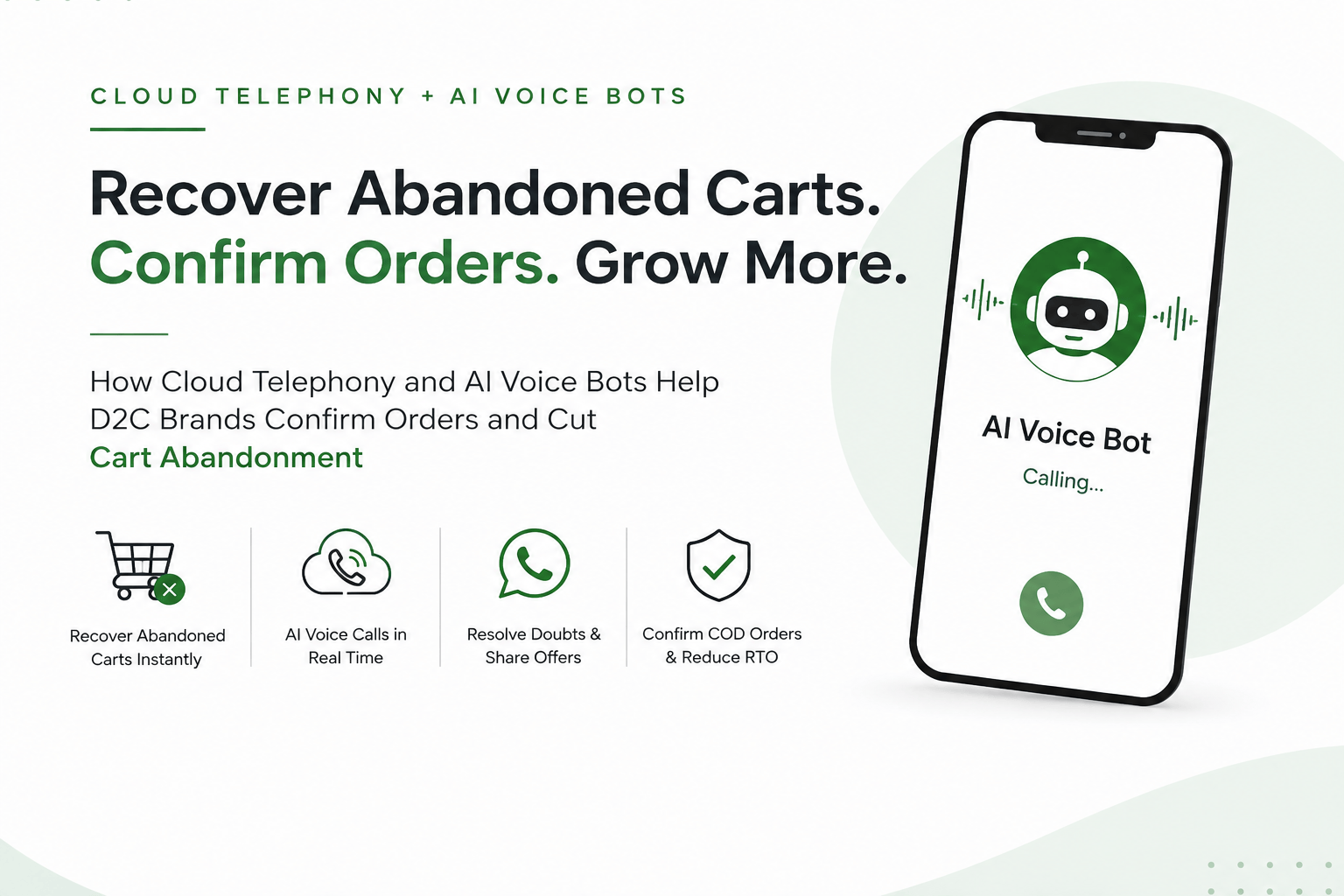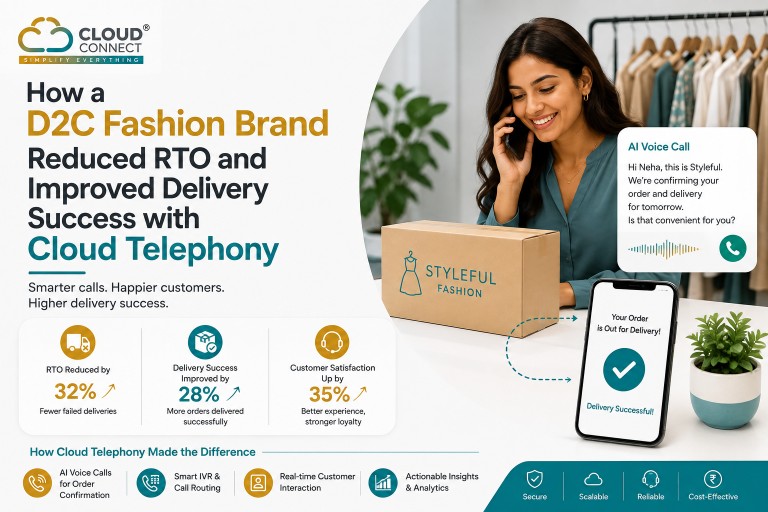
What if the biggest threat to your D2C fashion brand's profitability isn't a competitor's discount code — it's your own delivery van driving back to the warehouse empty? For fashion D2C brands in India, that scenario isn't rare. It's a daily operational reality, and it has a name: Return to Origin, or RTO.
The Numbers Behind the Problem
India's D2C fashion industry is growing fast, but growth is masking a costly inefficiency in the last mile. Before looking at solutions, it's worth understanding the scale of the problem in numbers.
|
Metric |
Data Point |
|
India D2C e-commerce market size |
USD 87.5 billion (2025), projected to reach USD 108.76 billion in 2026 |
|
Fashion & apparel share of e-commerce GMV |
~22%, the second-largest category after electronics |
|
Fashion & apparel RTO rate |
25–40%, the highest among major product categories |
|
COD share of Indian e-commerce orders |
60–65% of all online orders |
|
National average COD RTO rate |
~26% of COD orders returned undelivered, vs. under 2% for prepaid orders |
|
Average cost per RTO order |
₹150–350 per order in forward shipping, reverse logistics, and repackaging |
For a fashion brand shipping a few thousand COD orders a month, this isn't a rounding error — it's a direct hit to gross margin, working capital, and warehouse capacity.
1. The RTO Problem: Why Fashion D2C Brands Bleed Margin at the Doorstep
Fashion sits at the intersection of every RTO risk factor. Orders are impulse-driven, sizing and fit create hesitation after purchase, and Cash on Delivery remains the default payment method across Tier-2 and Tier-3 India, where a large share of new D2C demand now originates. When a customer isn't home, changes their mind, or simply never intended to pay at the door, the order boomerangs back to the warehouse — and the brand absorbs the full cost of a sale that never happened.
The damage compounds. Every RTO order means wasted forward shipping, a second reverse-logistics leg, repackaging labour, and inventory sitting idle in transit instead of being resold. For a brand doing meaningful COD volume, a 25–30% RTO rate can quietly erode a large share of annual margin — money that never shows up as a clean line item on the P&L, but drains it all the same.
2. Where Cloud Telephony Fits Into the Delivery Journey
Most fashion D2C brands try to fix RTO after the fact — chasing couriers, renegotiating logistics contracts, or writing off losses. Cloud telephony intervenes earlier, at the one moment that determines whether an order will actually be accepted: the point of dispatch.
A cloud-based communication layer sits between the order management system and the courier partner. The moment an order is packed, it can trigger an automated outbound call to the customer — in their preferred language — confirming the order, the address, and genuine intent to receive it. Orders that don't get confirmed can be flagged for manual review or held back, instead of being shipped blind and returned two weeks later.
3. AI Voice-Based COD Confirmation: How It Works
A typical automated confirmation flow looks like this:
• Order is placed and marked COD in the e-commerce or OMS platform.
• An AI Voice Bot places an automated call within minutes, confirming the order details in the customer's language.
• The customer confirms, requests a change, or doesn't respond — each outcome is logged and synced back to the OMS via API/CRM integration.
• Unconfirmed or suspicious orders are held for a manual follow-up call or a WhatsApp nudge before dispatch.
• Confirmed orders move to dispatch with a materially lower probability of refusal at the door.
Because the process is automated, it scales linearly with order volume — a brand doing 500 COD orders a day can confirm every single one without adding a large calling team.
4. The Measurable Impact: Before and After
Industry data on AI-driven COD confirmation programs points to a consistent pattern: brands that verify intent before dispatch see RTO rates drop meaningfully, without having to restrict COD availability or turn away price-sensitive customers. The table below illustrates the typical shift reported across D2C fashion and general merchandise brands after adopting automated confirmation calls.
|
Metric |
Before Automated Confirmation |
After Automated Confirmation |
|
COD RTO rate |
28–40% |
12–18% |
|
Manual verification effort |
Ad-hoc, inconsistent coverage |
100% of COD orders auto-confirmed |
|
Time to flag risky orders |
Discovered only at delivery failure |
Flagged before dispatch |
|
Customer language coverage |
Limited to agent availability |
Multilingual, 24×7 by default |
|
Logistics cost per 1,000 orders |
High — driven by failed deliveries |
Reduced via fewer reverse shipments |
These are illustrative, industry-level patterns rather than figures from a single named brand — actual results vary by category, price point, and geography, and should be benchmarked against a brand's own baseline RTO data.
5. Beyond RTO: Additional Delivery & CX Gains from Cloud Telephony
The benefits of a cloud telephony layer extend well past COD confirmation:
• Proactive delivery updates: automated calls or IVR flows for dispatch, out-for-delivery, and delay notifications reduce inbound "where is my order" queries.
• Address correction at source: voice-based verification catches incomplete or incorrect addresses before a courier ever attempts delivery.
• Omnichannel escalation: unresolved calls can route seamlessly into a cloud contact center for a human agent, with full context carried over.
• Data for demand planning: confirmation and refusal patterns by pincode help brands make smarter COD-availability decisions by region.
Together, these capabilities shift customer communication from reactive support to a proactive layer that protects both margin and customer experience.
Why Choose CloudConnect?
|
For D2C fashion brands looking to bring COD confirmation, delivery updates, and customer support onto one reliable platform, CloudConnect Communications offers: • India's 1st DOT-licensed B2B Virtual Network Operator (VNO) for cloud telephony • AI Voice Bots for automated COD confirmation and order/delivery updates, in multiple Indian languages • ISO 9001 and ISO 27001 certified, with 100% Indian data centers • 99.9% uptime SLA to keep confirmation and delivery workflows running without interruption • Trusted by 400+ enterprise customers across BFSI, healthcare, real estate, and e-commerce Explore how CloudConnect can help your brand reduce RTO and improve delivery success at cloudconnect.in. |
Conclusion
RTO isn't a cost of doing business in Indian fashion e-commerce — it's a solvable operational gap. By moving customer confirmation earlier in the order journey and automating it with cloud telephony and AI voice bots, D2C fashion brands can protect margin, reduce reverse logistics load, and build a more predictable delivery operation, all without sacrificing the COD convenience that customers expect.
Frequently Asked Questions
1. What is RTO and why is it so high for fashion D2C brands?
RTO (Return to Origin) happens when a dispatched order fails to reach the customer and is sent back to the warehouse. Fashion brands see higher RTO than most categories — typically 25–40% — because of impulse buying, fit/sizing hesitation, and heavy reliance on Cash on Delivery.
2. How exactly does cloud telephony reduce RTO?
It adds an automated confirmation step before dispatch. An AI Voice Bot calls the customer to verify the order and address; unconfirmed orders are flagged for follow-up instead of being shipped and risking refusal at the door.
3. Can AI voice bots handle India's regional languages?
Yes. Multilingual AI Voice Bots can confirm orders in the customer's preferred language, which improves response rates compared to English-only SMS or email confirmations, especially in Tier-2 and Tier-3 markets.
4. Does adding a confirmation call delay delivery timelines?
No, when integrated correctly. Confirmation calls are triggered automatically within minutes of order packing and typically complete well before the courier pickup window, so dispatch timelines stay on track.
5. Is this different from a WhatsApp or SMS confirmation message?
Voice confirmation captures a direct, verifiable response and works even for customers who don't actively check messages. Many brands use voice and WhatsApp together — voice for confirmation, WhatsApp for delivery-day reminders.
6. What results can a fashion D2C brand realistically expect?
Results vary by brand and category, but industry patterns show COD RTO rates commonly moving from the high-20s/30s percentage range down to the mid-teens after consistent automated confirmation — brands should validate this against their own baseline data.
7. Does CloudConnect's platform meet India's regulatory requirements for business calling?
Yes. CloudConnect operates as India's first DOT-licensed B2B Virtual Network Operator, with ISO 9001 and ISO 27001 certification and 100% Indian data centers, built specifically for compliant enterprise voice communication.
References
Mordor Intelligence – India D2C E-commerce Market: https://www.mordorintelligence.com/industry-reports/india-d2c-ecommerce-market
SaaSUltra – E-commerce Statistics India 2026: https://www.saasultra.com/india-ecommerce-statistics-2026/
Shipmozo – How to Reduce RTO in eCommerce: 2026 Guide: https://www.shipmozo.com/blog/how-to-reduce-rto-in-ecommerce
Note: Figures above are drawn from third-party industry reports current as of early-to-mid 2026. Given how quickly e-commerce and logistics benchmarks shift, please re-verify each statistic against the latest published source before publishing this article.